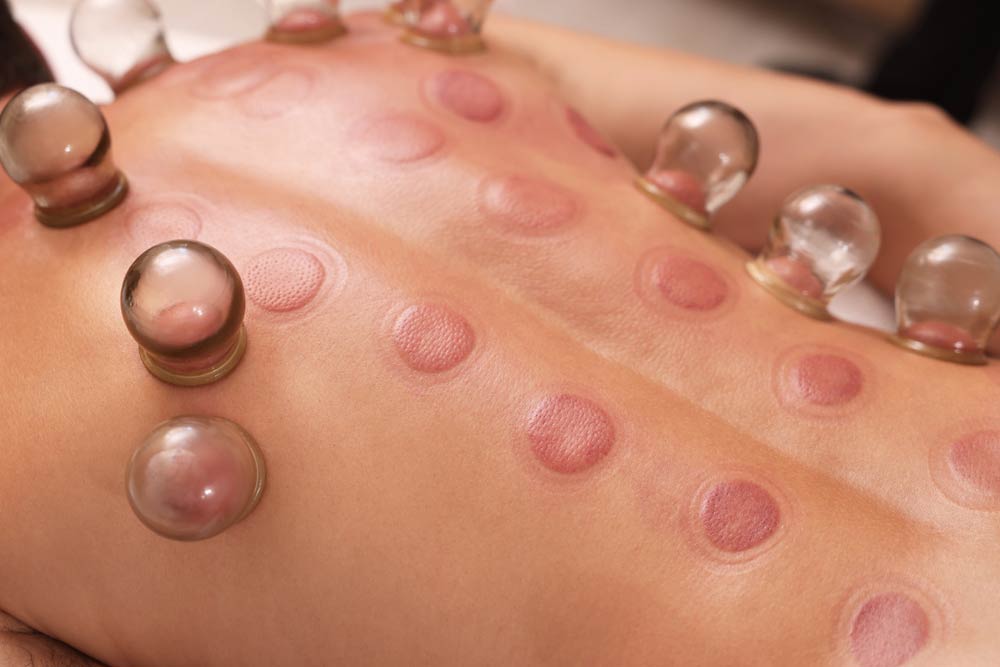
If you’ve ever seen someone with circular marks on their back and thought “ouch, that looks painful,” you’re not alone. Those distinctive purple circles are from cupping therapy, and no, they’re not bruises.
Let me clear up the confusion: bruises happen when you damage tissue through impact or trauma. The marks from cupping are something entirely different.
During cupping, I place glass or silicone cups on your skin and create suction, either through heat or a pump. This negative pressure pulls blood and fluid to the surface, bringing stagnant blood and metabolic waste up from deep tissue layers. Those circular marks you see? That’s your body’s way of showing where circulation was stuck.
Think of it like this: if you have a clogged drain, you need to pull the blockage up and out. Cupping does the same thing for your tissues. The darker the marks, the more stagnation was lurking beneath the surface. Areas with good circulation barely leave a mark at all.
Here’s what actually happens: the suction separates tissue layers that have become stuck together from injury, poor posture, or chronic tension. It increases blood flow to areas that weren’t getting enough circulation. And it triggers your body’s natural healing response, bringing fresh nutrients and oxygen to tissues that desperately need them.
My patients are often surprised by how good cupping feels. Yes, there’s pressure and a pulling sensation, but most people find it deeply relieving—especially if they’ve been dealing with chronic muscle tension or pain. And unlike a bruise that’s tender to touch, cupping marks typically don’t hurt at all.
The marks usually fade within three to seven days, depending on how much stagnation was present. As your body clears the metabolic waste and restores proper circulation, the discoloration disappears. Regular cupping patients notice their marks get lighter over time—a sign that circulation is improving and there’s less stagnation to clear.
Cupping is particularly effective for tight shoulders, lower back pain, and respiratory issues. It’s been used in Traditional Chinese Medicine for thousands of years, and modern athletes have embraced it for muscle recovery and performance.
So the next time you see those telltale circles, don’t wince in sympathy. Those marks are actually evidence of healing in progress—your body releasing what it’s been holding onto and making space for fresh, oxygenated blood to flow freely again. That’s not damage. That’s your body doing exactly what it’s supposed to do.